
Events
Colloquium
FDS Colloquium: Meet Our Postdocs
Wednesday, September 23, 2026
11:30AM - 1:00PM
Talks at 12:00pm in 1327
Location: Yale Institute for Foundations of Data Science, Kline Tower 13th Floor, Room 1327, New Haven, CT 06511 and via Webcast: https://yale.hosted.panopto.com/Panopto/Pages/Viewer.aspx?id=eb4ff768-c934-474f-a874-b4c50120cc4b
 |
Speaker: Shuyang Gong (Yale) Postdoctoral Fellow Yale University Talk Title: Statistical and computational limits in random models Abstract: Many random models exhibit sharp transitions between what is statistically possible and what can be achieved by efficient algorithms. This talk will briefly discuss two related directions. The first concerns statistical and computational thresholds in high-dimensional random problems, with an emphasis on understanding possible gaps between information and computation through tools such as low-degree methods and the geometry of solution spaces. The second concerns statistical inference on random graphs, including problems in graph matching, stochastic block models, and preferential attachment. The goal is to give a broad overview of these themes and some of the probabilistic questions that connect them. Speaker bio: Shuyang Gong is an FDS postdoc at the Institute for Foundations of Data Science at Yale University. He received his PhD in mathematics from Peking University, under the supervision of Prof. Dayue Chen and Prof. Jian Ding. His research focuses on probability theory and its intersections with theoretical statistics and theoretical computer science. |
 |
Speaker: Shayan Hundrieser (Yale) Postdoctoral Fellow Yale University Talk Title: Learning Convex Functions with Shape-Constrained Neural Networks Abstract: Shape-constrained inference is well-established in low-dimensional nonparametric statistics, but high-dimensional settings call for machine-learning approaches. In this talk, we introduce Hyper Input Convex Neural Networks (HyCNNs), a novel neural network architecture to learn convex functions. HyCNNs are by design alway convex in the input, theoretically capable of leveraging depth, and perform reliable when trained at scale. Concretely, we prove that HyCNNs require exponentially fewer parameters than well-established input convex neural networks (ICNNs) to approximate quadratic functions up to a given precision. Throughout a series of experiments, HyCNNs are shown to outperform ICNNs for convex regression and optimal transport map estimation.
Speaker bio: Shayan Hundrieser is a postdoctoral visiting researcher in the Department of Statistics and Data Science at Yale University since May 2026, funded by a Leopoldina Scholarship from the German National Academy of Sciences. He received his Ph.D. in Mathematical Sciences from the University of Göttingen, where he was advised by Axel Munk. Before joining Yale, he held postdoctoral positions at the University of Twente and the University of Göttingen, and he earned both his B.Sc. and M.Sc. in Mathematics at the University of Göttingen. His research develops principled statistical learning methods and theory for structured and high-dimensional data, with emphasis on optimal transport, structured neural architectures, and inverse problems.
|
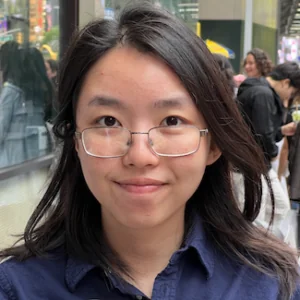 |
Speaker: Yan Liang (Yale) Postdoctoral Fellow Yale University Talk Title: AESTRA II: Generative Spectral Modeling of the Sun as a Star for Precise Radial Velocities Abstract: The detection of Earth analogs with extreme-precision radial velocities (EPRVs) is limited by spectral variability from stellar activity, telluric absorption, and instrumental systematics. We apply AESTRA, a generative spectrum modeling framework, to NEID Sun-as-a-star observations. AESTRA empirically decomposes the spectra into stellar line-shape variability, micro-telluric absorption, and continuum variability without external atmospheric or stellar templates. After removing the learned telluric and continuum components, we train a low-dimensional representation of the spectrum to infer activity-driven apparent RVs jointly with candidate Doppler signals. We evaluate the method with 500 single-planet injection-recovery tests spanning periods of 2.5 to 400 days and semi-amplitudes of K = 0.1 to 0.7 m s^-1, calibrating the detection criterion to yield zero spurious detections. At this matched confidence level, AESTRA recovers 238 injected planets, including 13 with K < 0.3 m s^-1, whereas traditional CCF-based activity-indicator detrending recovers 9 planets and none below K = 0.5 m s^-1. Speaker bio: Yan Liang is a 51 Pegasi b Fellow at Yale University. She develops generative AI models to disentangle stellar activity from planetary signals in radial-velocity data, with the goal of uncovering small, Earth-like planets. More broadly, she is interested in applying machine learning methods across astronomy. She received her Ph.D. in astrophysics from Princeton University and her B.A. in physics from UC Berkeley. |
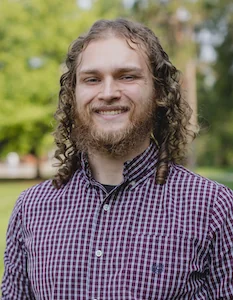 |
Speaker: Ben Jones (Yale) Postdoctoral Fellow Yale University Talk Title: Diffusion Geometry of Neural and Language Representations Abstract: Many systems have inherent geometric structures, which we can analyze with diffusion operators. In this talk, I will discuss two projects in which diffusion geometry plays a central role. The first uses diffusion wavelets on graphs to encode neural signals and decodes it to recover text. The second shows that the diffusion operators of LLM hidden states become increasingly aligned as model size grows and exploits this to teach a small model the geometry of larger ones. Speaker bio: Ben Jones joined Smita Krishnaswamy’s lab as a Postdoctoral Associate in August 2026. Ben received his PhD in Mathematics from Michigan State University, where he was advised by Guo-Wei Wei. During his PhD, his work developed algebraic and geometric topology methods for applications in molecular biology. His current research investigates geometric, topological, and graph-based deep learning methods for biological problems, with applications including neuroscience. |
 |
Speaker: Xueyuan (Eric) Gao (Yale) Postdoctoral Fellow, Yale Center For Natural Carbon Capture Yale University Talk Title: Measuring and monitoring forest restoration using remote sensing and AI Speaker bio: Eric Xueyuan Gao is a YCNCC Postdoctoral Fellow at Yale University. His research focuses on nature-based climate solutions and voluntary carbon and nature markets. His work has been recognized with 2026 American Geophysical Union “Impactful Dataset” award, 2025 Ecological Society of America Early Career Ecologists Outstanding Paper Award, and the 2023 American Association of Geographers Council Award for Outstanding Graduate Student Paper. He serves as a Technical Expert Panel member for Verra, a registry in the voluntary carbon market, and is a member of the SHIFT-CM initiative hosted by Yale University and The Nature Conservancy. https://naturalcarboncapture.yale.edu/profile/eric-xueyuan-gao |
Add To: Google Calendar | Outlook | iCal File
- Colloquium
- Student Led Seminar
Submit an Event
Interested in creating your own event, or have an event to share? Please fill the form if you’d like to send us an event you’d like to have added to the calendar.