
Newsroom
Game Theory
-
FDS Colloquium: Tim Roughgarden (Columbia & a16z crypto)
Speaker bio: Tim Roughgarden is a Professor in the Computer Science Department at Columbia University and the Founding Head of Research at a16z crypto. Prior to joining Columbia, he spent 15 years on the computer science faculty at Stanford, following a PhD at Cornell and a postdoc at UC Berkeley. His research interests include the…
-
FDS Seminar: Akhil Premkumar (UChicago), “An information theoretic view of machine learning”
Abstract: Diffusion models serve as a bridge between generative AI and information theory. These models have demonstrated a remarkable ability to learn high-dimensional continuous distributions, like images and video, from relatively small training datasets. They can do this because they learn the ensemble statistics of the entire dataset, allowing them to identify long wavelength correlations between…
-
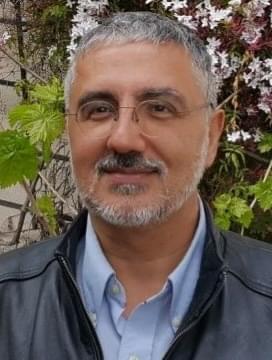
FDS Colloquium: Houman Owhadi (Caltech), “Co-discovering graphical structure and functional relationships within data: A Gaussian Process framework for connecting the dots”
Abstract: Most scientific challenges can be framed into one of the following three levels of complexity of function approximation. Examples of Type 2 problems include solving and learning (possibly stochastic) nonlinear partial differential equations (PDEs), while Type 3 problems encompass learning dependencies between variables in a mechanical system, identifying chemical reaction networks, and determining relationships between…
-
FDS Colloquium: Bento Natura (Columbia), “Faster Exact Linear Programming”
Optional Zoom link: https://yale.zoom.us/j/99342713421 Abstract: We present a novel algorithm to solve various subclasses of linear programs, with a particular focus on strongly polynomial algorithms—those that operate in polynomial time relative to the problem’s dimension. Although subclasses like bipartite matching and maximum flow are known to be solvable in strongly polynomial time, the existence of…
-
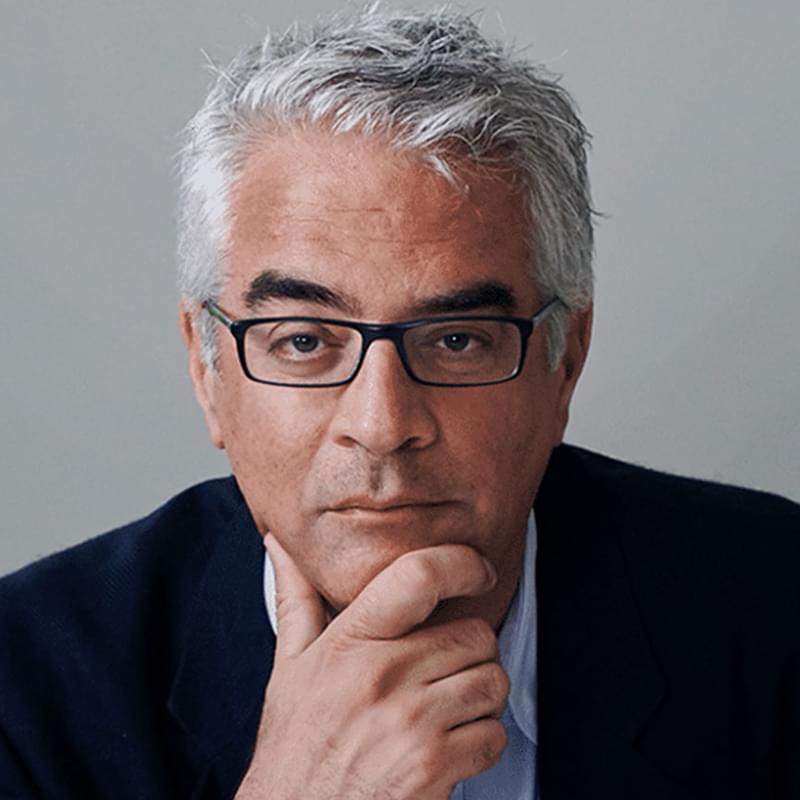
Nicholas A. Christakis (Sociology) elected to National Academy of Sciences
Congratulations to FDS member Nicholas A. Christakis, MD, PhD, MPH, elected as a member of the National Academy of Sciences.