
Newsroom
Networks
-
FDS Colloquium: Tim Roughgarden (Columbia & a16z crypto)
Speaker bio: Tim Roughgarden is a Professor in the Computer Science Department at Columbia University and the Founding Head of Research at a16z crypto. Prior to joining Columbia, he spent 15 years on the computer science faculty at Stanford, following a PhD at Cornell and a postdoc at UC Berkeley. His research interests include the…
-
-
FDS x Applied Physics Colloquium: Grant Rotskoff (Stanford), “Efficient variational inference with generative models”
Abstract: Neural networks continue to surprise us with their remarkable capabilities for high-dimensional function approximation. Applications of machine learning now pervade essentially every scientific discipline, but predictive models to describe the optimization dynamics, inference properties, and flexibility of modern neural networks remain limited. In this talk, I will introduce several approaches to both analyzing and…
-
FDS Colloquium: Song Mei (Berkeley), “Revisiting neural network approximation theory in the age of generative AI”
Optional Zoom link: https://yale.zoom.us/j/97222935172 Abstract: Textbooks on deep learning theory primarily perceive neural networks as universal function approximators. While this classical viewpoint is fundamental, it inadequately explains the impressive capabilities of modern generative AI models such as language models and diffusion models. This talk puts forth a refined perspective: neural networks often serve as algorithm approximators,…
-
FDS Colloquium: Josh Alman (Columbia), “Algorithms and Hardness for Kernel Density Estimation and Attention”
Webcast Link (via Zoom – starts at 12:00): https://yale.zoom.us/s/7859884026 “Algorithms and Hardness for Kernel Density Estimation and Attention” Abstract: This talk will focus on two related computational problems. The first is Kernel Density Estimation, a statistical task which has diverse applications from machine learning to computational physics. The second is Attention, the task at the core…
-
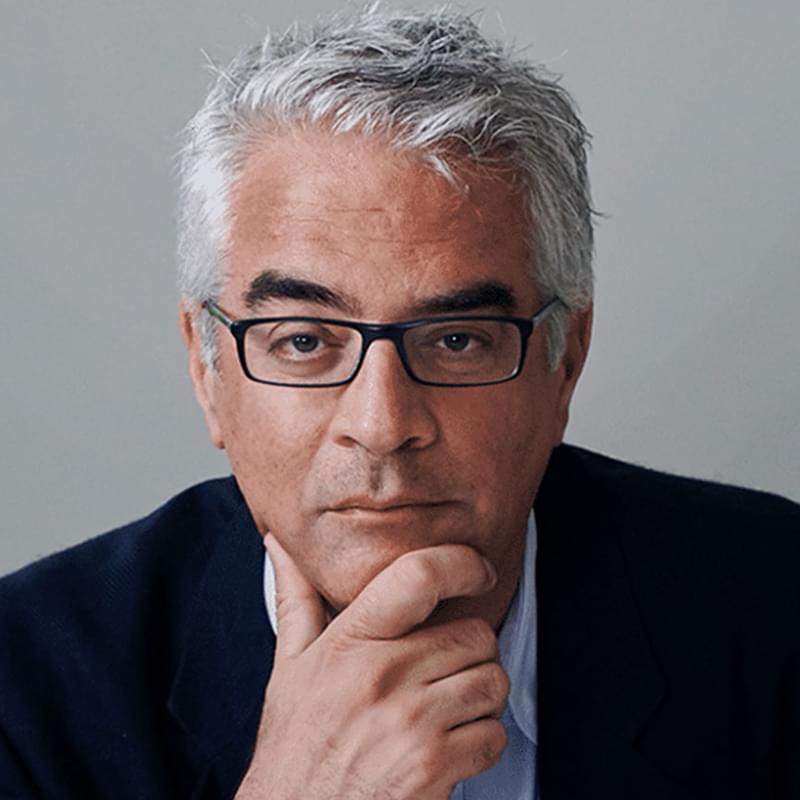
Nicholas A. Christakis (Sociology) elected to National Academy of Sciences
Congratulations to FDS member Nicholas A. Christakis, MD, PhD, MPH, elected as a member of the National Academy of Sciences.